

OCCUPATIONAL THERAPY (OT)
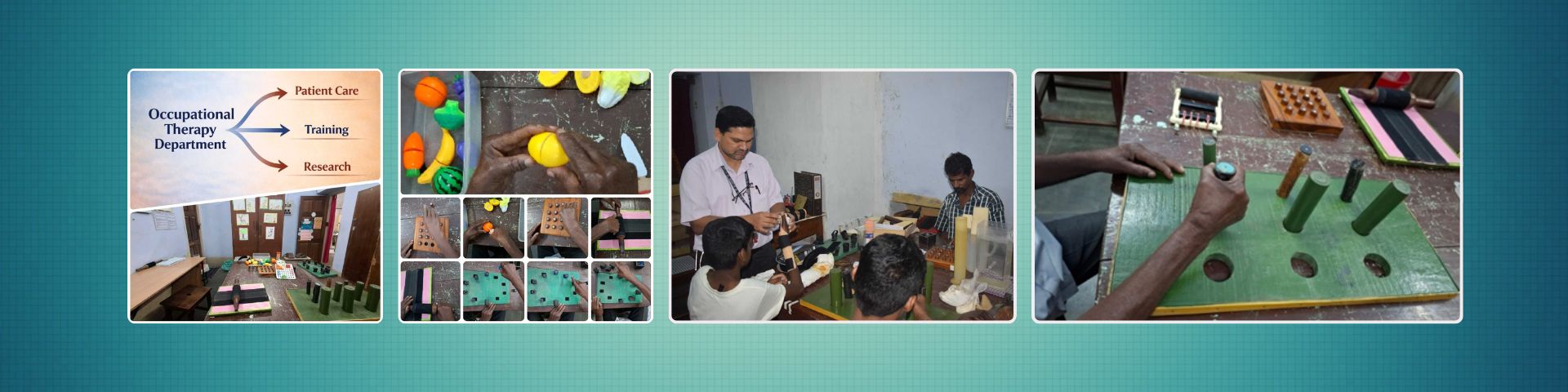
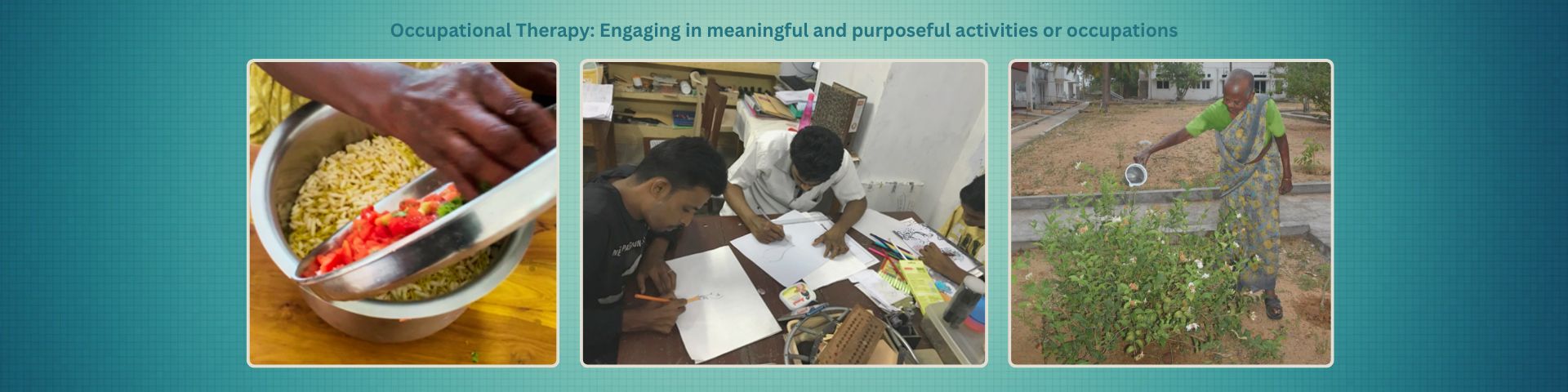
Occupational Therapy (OT) is a profession concerned with promoting health and well being through ‘occupation’. Occupations are daily tasks, things and activities that people need to, want to and are expected to do. The primary goal of OT is to enable people to participate in the activities of everyday life (World Federation of Occupational Therapists, 2012).
Occupational therapy care in leprosy contributes to the prevention and management of impairments, activity limitations (disabilities) and facilitates participation (community integration) thereby helping leprosy affected individuals live their life to the fullest.
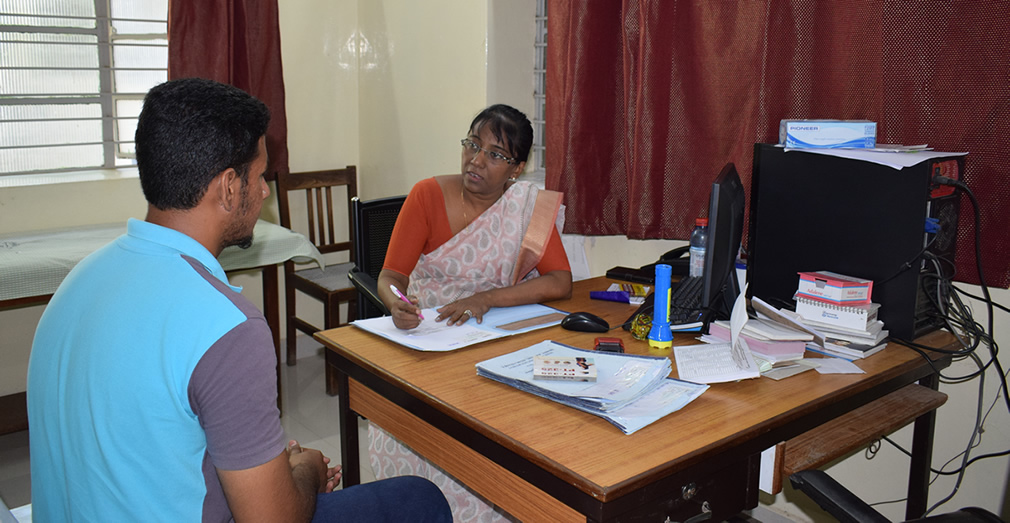
In line with our corporate vision & mission statement occupational therapy service is dedicated to deliver high-quality, cost-effective treatment and provide holistic care to patients and thereby assist in transforming their lives especially those affected by leprosy. Occupational therapy is provided for inpatients and outpatients clinics. A referral from any physician is required to avail the service. Clients receive the services as follows:
- Assessment of functional status (Hand function, Activities of daily living (ADL), Work assessment).
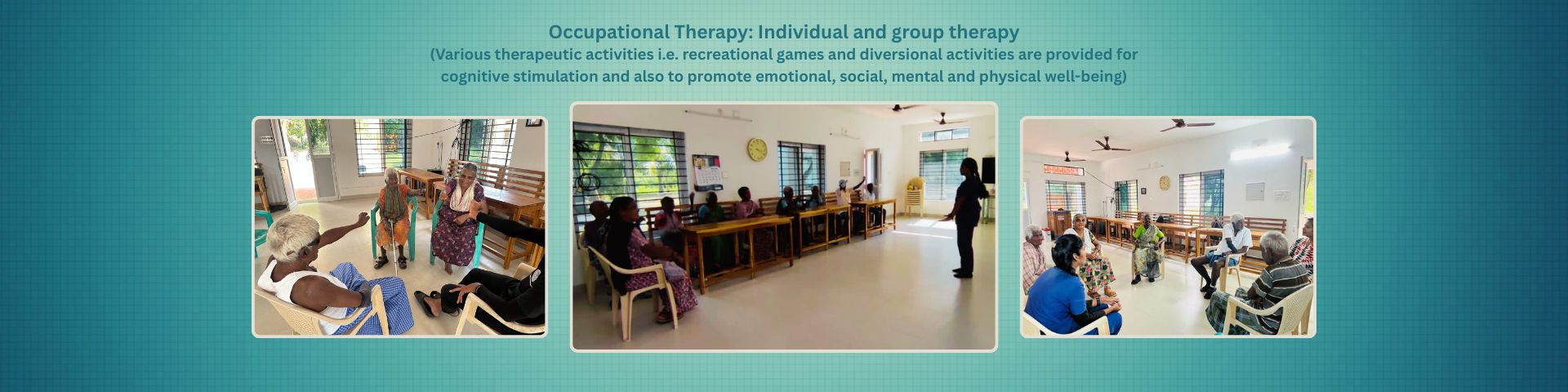
- Individual treatment or group therapy sessions.
- Therapy to maximize ADL performance skills.
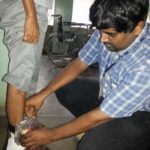
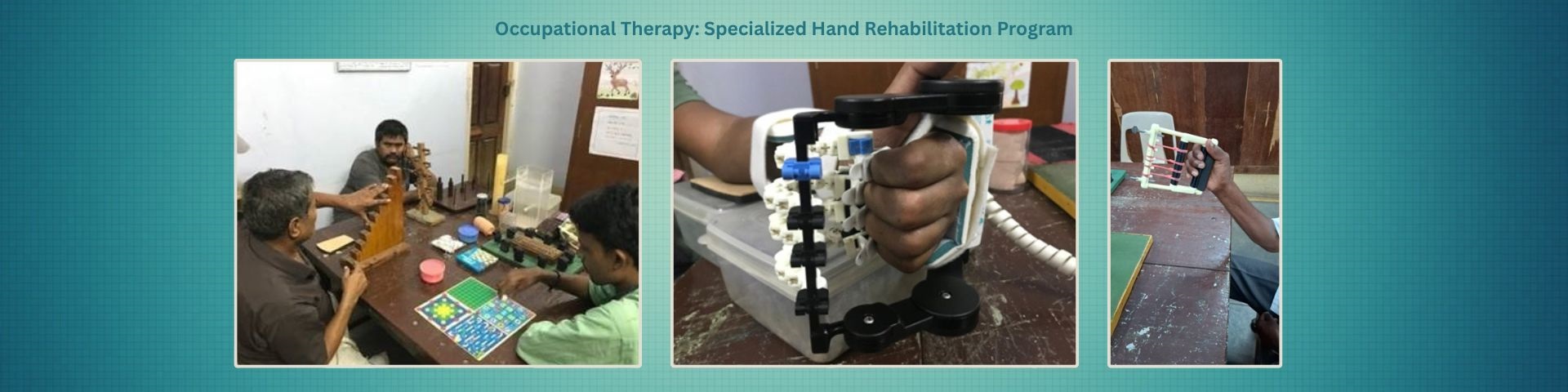
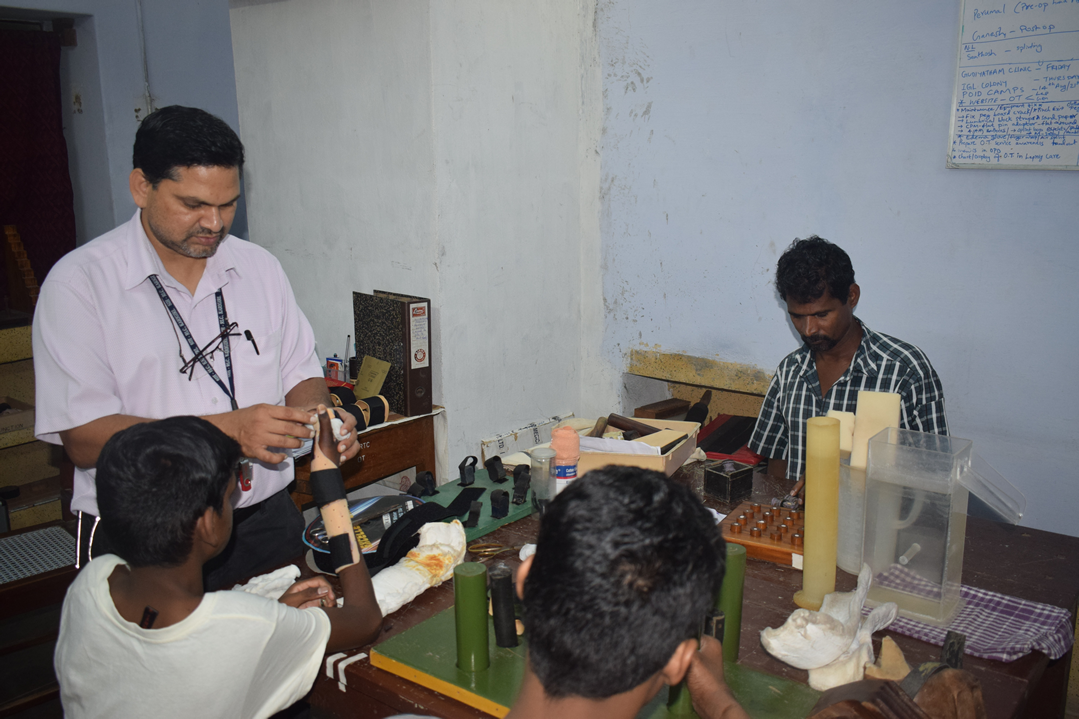
- Provision of specialized hand therapy to help patients gain/ regain hand function & fine motor skills for their daily activities.
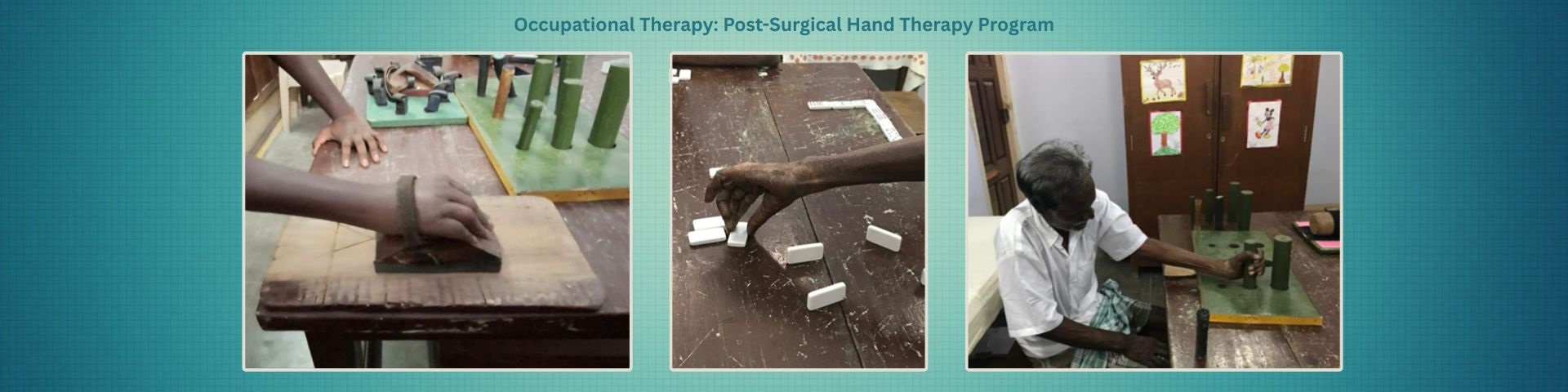
- Pre-operative and post-operative hand therapy & functional training/ retraining to patients admitted for deformity correction surgeries.
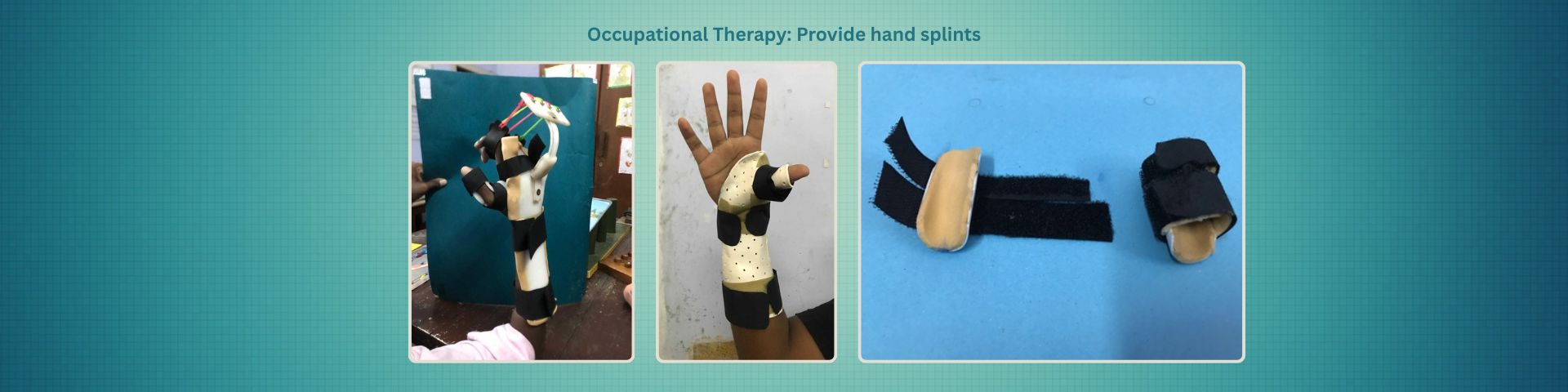
- Provide hand splints.
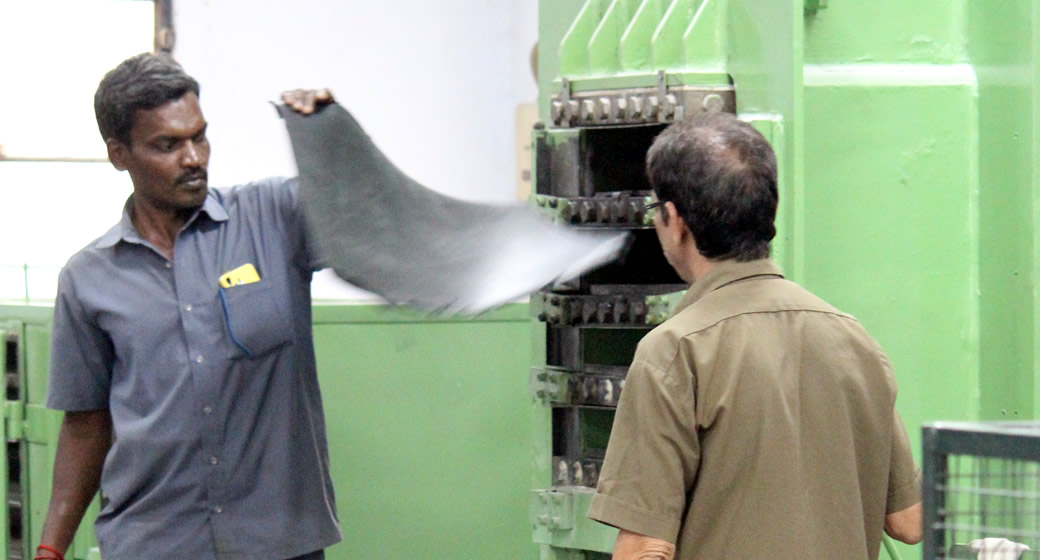
- Pre-vocational / vocational assessment, report & guidance.
- Conditioning prior to return to work.
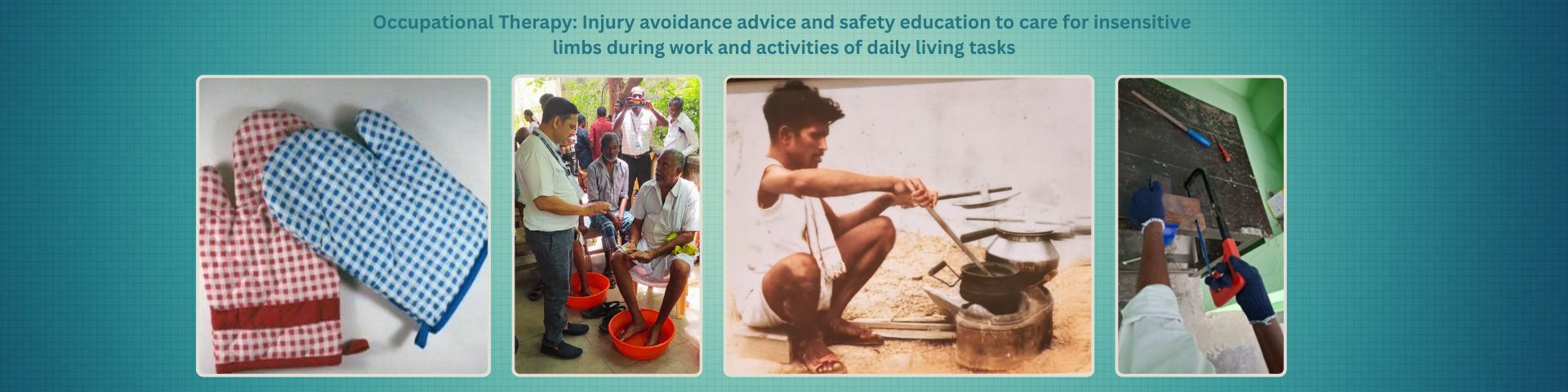
- Education to patients and their family members/ care takers regarding the disease and teach self care methods for eyes, hand & feet to prevent secondary impairments.
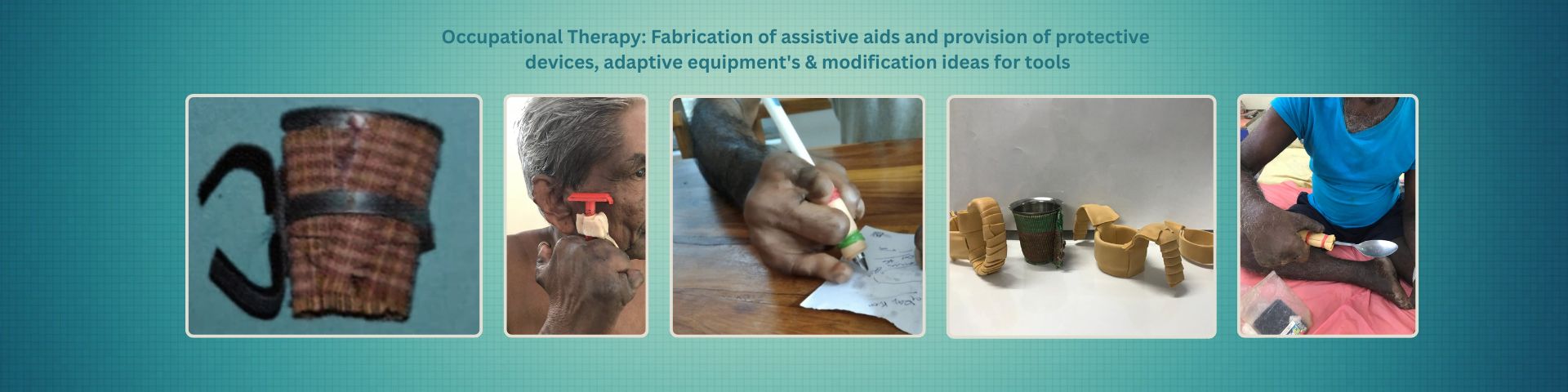
- Fabrication of assistive aids and provision of protective devices, equipment’s/ tools adaptations & ergonomic modifications/ advice to improve performance and safety in ADL tasks and work.
- Injury avoidance advice and safety education to care for anesthetic limbs during activities of daily living tasks.
- Provide recreational activities & diversional therapy to inpatients.
- Recommend environmental adaptations (home accessibility) to ensure independence.
OT incorporates the patient’s occupations into the rehabilitation process. The occupations can also include many roles, such as being a bread winner, parent, a friend, a spouse, tennis player, an artist, a cook, a musician etc. The client goals & needs are met and the aims related to occupational therapy scope of practice and services are achieved to ensure a better quality of life.
- Carrying out the daily activities of life e.g. brushing teeth, washing, taking bath, dressing, eating, walking/ moving from one place to another
- Doing work/ job related activities
- Educational/ school/ college related activities
- Leisure time activities/ hobbies
- Cooking, home maintenance activities etc.
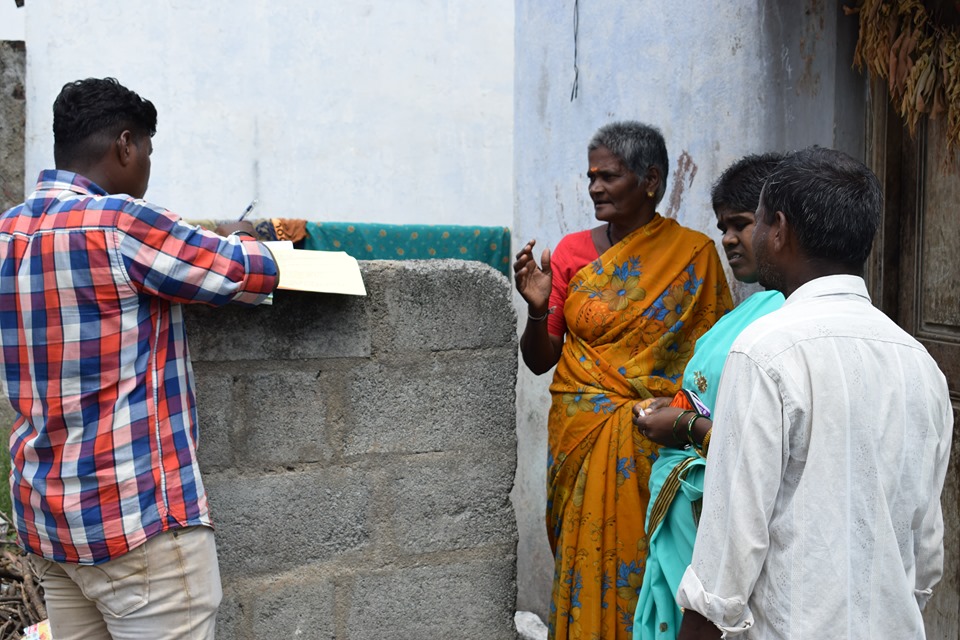
- Participation activities which include driving/ outdoor mobility, visiting friends, going to religious buildings, attending social meetings and other activities that keep an individual connected with their community.
Carrying out these tasks require adequate physical, psycho-social, cognitive/ perceptual (mental) skills. The patients valued occupations mentioned above may be disrupted if they are recovering from an accident or acute or chronic conditions such as stroke, fractures, spinal cord injuries, brain injuries, amputations, Parkinson’s disease, dementia and children with various disabilities etc. These patients will benefit from the OT services. Occupational therapists assess the functional deficits caused by such diseases through different methods and train or re-train patients to reach their optimum functional level in the following domains:-
- Activities of Daily Living tasks
- Physical, cognitive/ perceptual (mental) and social abilities
- Community integration
As a member of the multi-disciplinary rehabilitation team the occupational therapists cooperates and coordinates with other medical/ allied health care professionals, family members and caregivers in providing the care. With the background knowledge of a person’s, physical, emotional, psychological and social makeup, occupational therapy practitioners can provide care from head to toe which also includes the following services:-
- Assessment and advice on seating/ wheelchairs & positioning.
- Recommend assistive aids / assistive equipments & orthotic devices.
- Advice on home adjustments /modification & adaptation following disability
- Guidance on building disabled access houses/ bathrooms etc…
|
 |
|
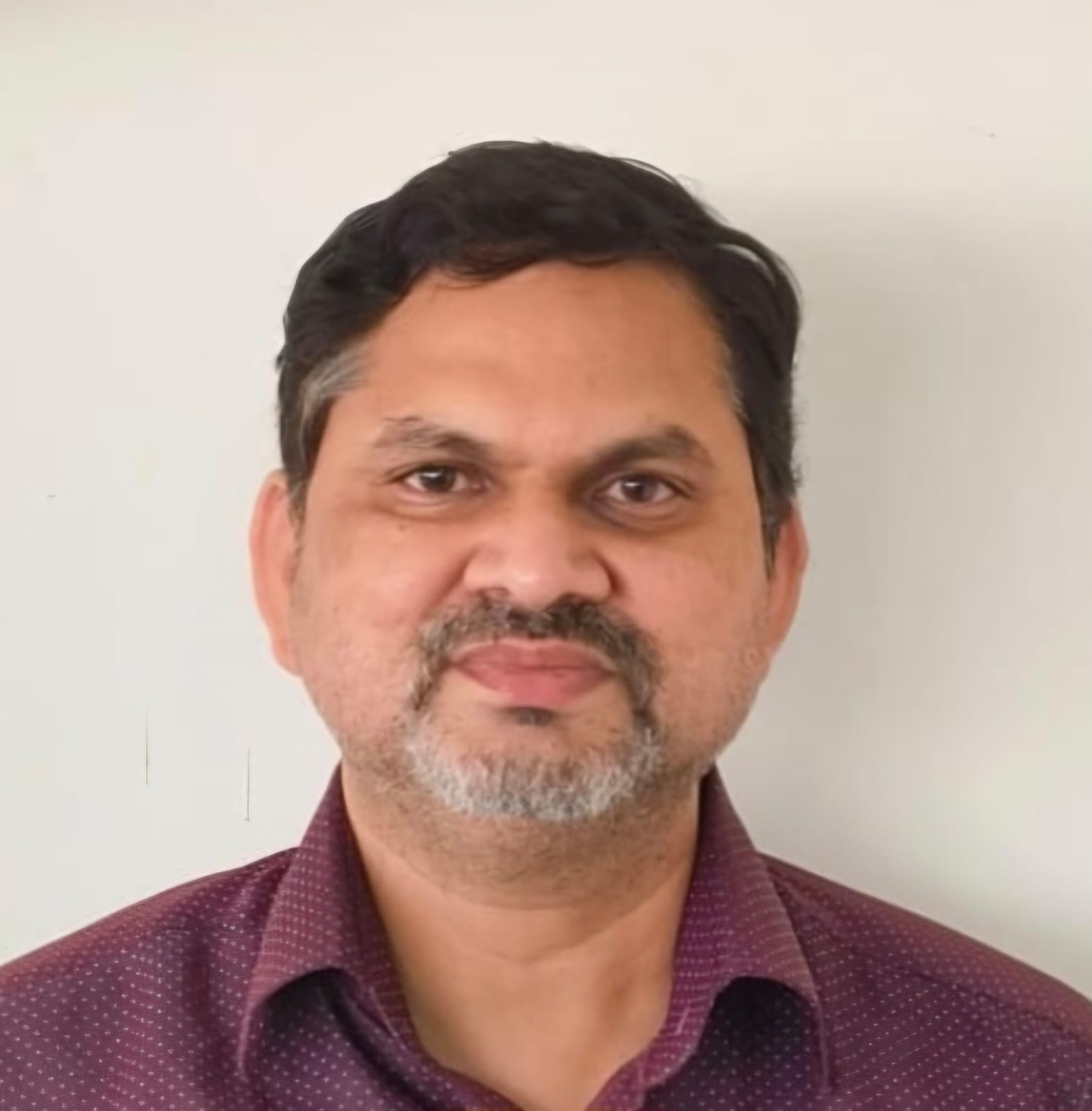
Dedicated occupational therapist with over 27 year’s of national and international (India, Ireland & Qatar) experience in diverse areas of rehabilitation of the physically challenged / disabled, including 10 years of working closely in the care of Hansen’s disease (Leprosy) affected persons and has contributed as one of the authors for three articles publication in the well known journals as of April 2026. • Carry out rehabilitation related research projects, present in conferences and submit articles for publication. |
Occupational therapy service will be an innovative, leading regional health program dedicated to educate / provide training to healthcare professionals in the relevant leprosy care.
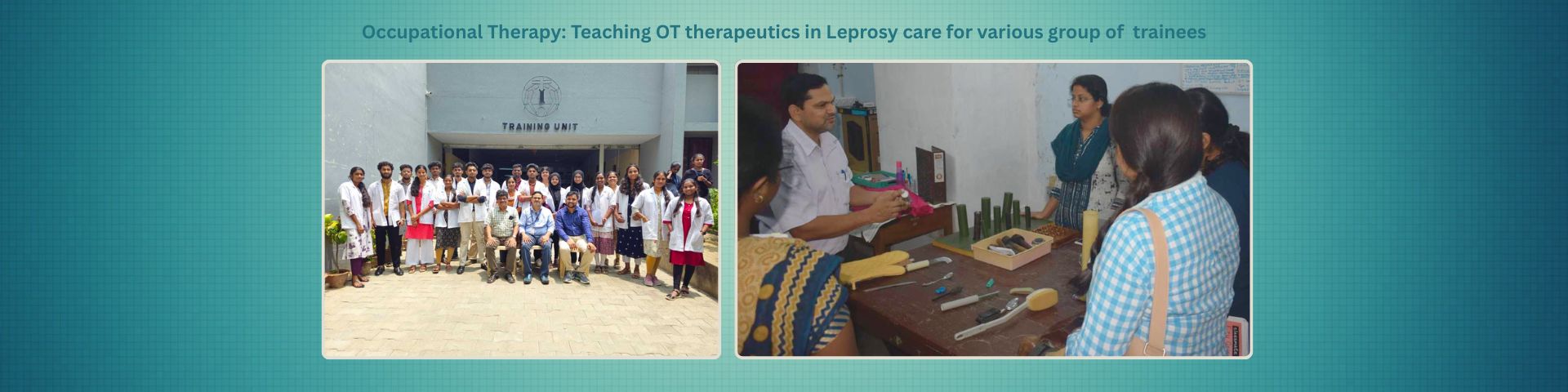
‘Essentials of occupational therapy in leprosy’ is a short term course conducted for undergraduate and post-graduate occupational therapy students from colleges across the country.
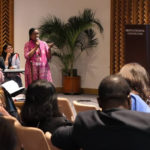
Training is provided on `Orientation to occupational therapy aspects in Leprosy care’ for the regular and other physiotherapy students, medical & various other health care workers/ students (national/ international) visiting our institution.
Short-term internship training & work experience programs are offered for occupational therapy students/ graduates.
Occupational therapy service is committed to participate in appropriate clinical research of the institution and work on the ongoing studies of the department & also develop new research proposals.
`Development of an Activity scale to assess limitations in people affected by leprosy and persons with Diabetic neuropathy’-Principal Investigator (India) for this International multi-centric research study done between the years 2000 and 2002.
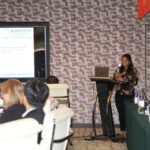
Conference presentations / Proceedings / Abstracts
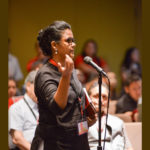
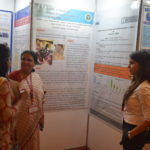
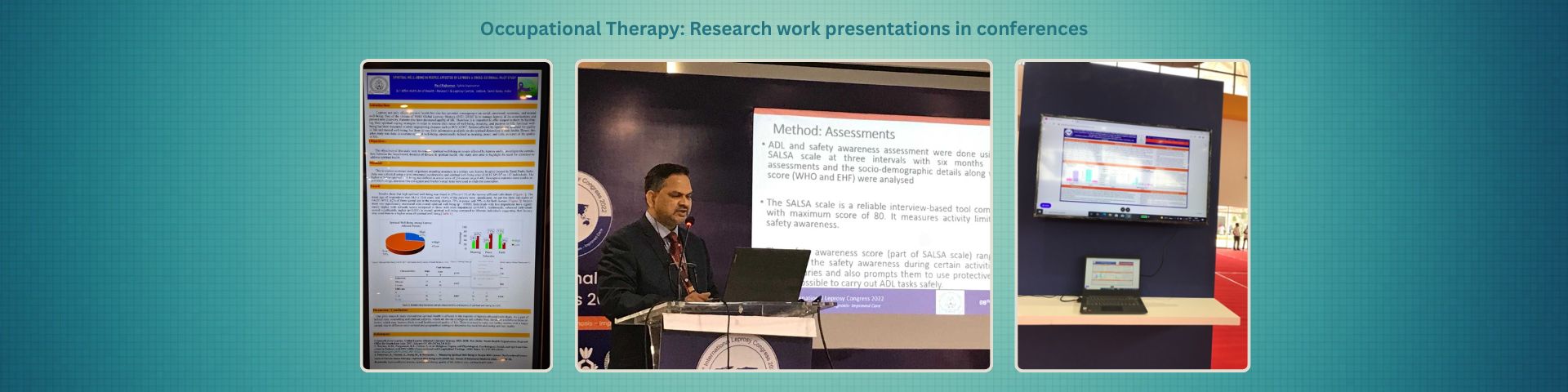
‘Spiritual Well-Being in People Affected by Leprosy: A Cross-Sectional Pilot Study’ (first author) – Presented at the 22nd International Leprosy Congress (ILC) 2025 held at Bali, Indonesia between July 5th to 9th.
`A survey of safety awareness and limitations in activities of daily living among patients affected by leprosy attending an out-patient treatment facility at a tertiary care leprosy hospital in South India’ (first author) – Presented at the 21st International Leprosy Congress (ILC) 2022 held at Hyderbad, India between 8th to 11th November.
`The association between the level of activities of daily living function, safety awareness and impairment status in patients attending a tertiary care leprosy hospital in the Tamil Nadu state of India: a longitudinal study’ (first author) – Presented at the 21st International Leprosy Congress (ILC) 2022 held at Hyderbad, India between 8th to 11th November.
‘Relationship between grip strength, pinch strength and basic activities of daily living in denervated hands’ (first author) presented at the Indian Association of Leprologists [IAL] Bi-ennial Golden Jubilee Conference held from November 23 to 25, 2001 at Patna, Bihar, India.
‘Prevention of secondary impairments and its sequelae due to peripheral nerve damage in leprosy – What can occupational therapy do?’- (first author)Published in the abstract book of Asian Leprosy Congress, November 2000.
‘Relationship between grip strength, pinch strength and basic activities of daily living performance in leprosy patients’- (first author) Published in the abstract book of Asian Leprosy Congress, November 2000 page no. 207
- ‘Grip and pinch strength in relation to function in denervated hands’.
P Rajkumar; R Premkumar; J Richard,
Indian Journal of Leprosy; 2002 Oct-Dec; 74(4):319-328
- ‘The impact of hand dominance and ulnar and median nerve impairment on strength and basic daily activities’.
P Rajan; R Premkumar; P Rajkumar; J Richard
Journal of Hand Therapy; 2005 Jan-Mar; 18(1):40-45
- ‘The development of a short questionnaire for Screening of Activity Limitation and Safety Awareness (SALSA) in clients affected by leprosy or diabetes’.
SALSA Collaborative Study Group.
Disability and Rehabilitation, May 2007; 29(9): 689–700
The SALSA Collaborative Study Group included the following persons and institutions who participated in this study project in field Locations: Jannine Ebenso (The Leprosy Mission Nigeria), Priscila Fuzikawa (Municipal Health Secretariat in Betim, Minas Gerais, Brazil), Hanna Melchior & Ruth Wexler (Hansen Hospital, Jerusalem, Israel), Angelika Piefer (The Leprosy Mission South East Asia), Prof Chen Shu Min (Provincial Institute of Dermatology, Shandong, China), Paul Rajkumar (Schieffelin Research & Training Centre, Karigiri, Tamil Nadu, India); in support roles: Alison Anderson (Partners for Rehabilitation, Green Pastures, Pokhara, Nepal), Catherine Benbow (United Kingdom), Linda Lehman (American Leprosy Missions), Peter Nicholls (Univ. of Aberdeen, United Kingdom), Paul Saunderson (American Leprosy Missions), Johan P. Velema (The Leprosy Mission International).
The Schieffelin Institute of Health – Research & Leprosy Centre (SIH-R & LC),
Karigiri, (via Katpadi) – 632106, Vellore District,
Tamil Nadu, India.
Phone: 0416-2274-223
Mobile: 9442274224
Email: directorate@karigiri.org